Best data structures books in 2022 | Read These Books to Become Prominent in Data Structure

You have already understood the importance of Data Structure in writing efficient codes. And to be a better programmer, you have to master in this area. So, I've reviewed some best Data Structures books in 2022 that will surely help you to start your learning today.
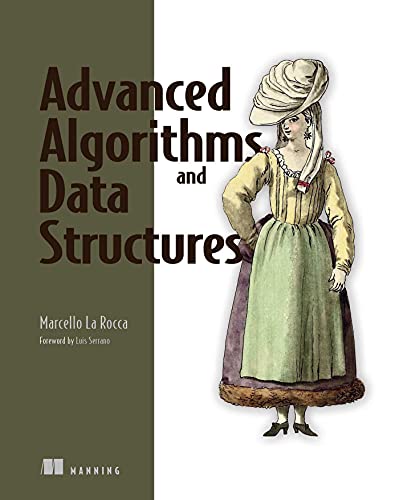
The book starts with a bit of a warm up, which is a good refresher if it has been a while since your "analysis of algorithms" studies. It then progresses into applying your reasoning skills on understanding, measuring, and improving performance using a few common data structures and the algorithms that operate on them. In this first part of the book, I found the discussion on Bloom Filters particularly well done and have suggested that to some colleagues trying to understand the technique.
Part 2 launches into a series of chapters on multidimensional queries and analysis (ie nearest neighbor). I particularly liked the k-d tree discussion and the later discussion on clustering. It was timely with some work architecture and a nice reference for folks getting started in this area.
Part 3 is focused on graph theory and algorithms. If you need to brush up on graph searching and traversal, gradient descent, and simulated annealing, this is the section for you. This is an area I'm less familiar with, so it was a help intro for me. It is interesting, particularly in considering some AI/ML tools, to get at least the basics in the space. The section ended with genetic algorithms, which was a good introduction, and refreshed my experiences using these techniques back in school.
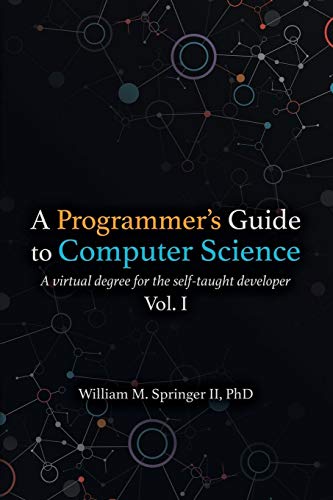
This book was exactly the approach I needed. Dr. Springer's examples and explanation of the problems, to me, show that he must have really listened to what his audience was going through and provides in this book a conversational approach to learning complex topics. Great review/concise summary of important topics in computer science. Might be overwhelming for someone who has never studied CS at all. Was a great refresher for me on topics I'd studied long ago, and a good introduction to others I'd never learned. That's an interesting book on CS (computer science), limited in its contents details and scope, and that is the book's intention. It gives you summary details on multiple CS subjects, and that is a good and quick read in order to get acquanted on the subject's surface.
If you are just getting into programming and need to learn the fundamentals of Data Structures and Algorithms this book is so thoughtfully written with the beginner in mind. The author does not dive into the nitty gritty of the mathematics involved in algorithmic complexity and doesn't need to! This book is so beginner friendly that even a child can learn from it and find it fun at the same time. The book is full of diagrams with detailed explanations making learning this subject like playing fun puzzle games. You can clearly tell that the author knows exactly how to simplify computer science to the average person. I highly recommend this book as a starter to learn the subject, and hats off to Jay Wengrow!
Explore data structures and algorithm concepts and their relation to everyday JavaScript development. A basic understanding of these ideas is essential to any JavaScript developer wishing to analyze and build great software solutions.
- Review core data structure fundamentals: arrays, linked lists, trees, heaps, graphs, and hash-table
- Review core algorithm fundamentals: search, sort, recursion, breadth/depth-first search, dynamic programming, bitwise operators
- Examine how the core data structure and algorithms knowledge fits into the context of JavaScript explained using prototypical inheritance and native JavaScript objects/data types
- Take a high-level look at commonly used design patterns in JavaScript
Advanced-Data Structures presents a comprehensive look at the ideas, analysis, and implementation details of data structures as a specialized topic in applied algorithms. Data structures are how data is stored within a computer, and how one can go about searching for data within. This text examines efficient ways to search and update sets of numbers, intervals, or strings by various data structures, such as search trees, structures for sets of intervals or piece-wise constant functions, orthogonal range search structures, heaps, union-find structures, dynamization and persistence of structures, structures for strings, and hash tables. This is the first volume to show data structures as a crucial algorithmic topic, rather than relegating them as trivial material used to illustrate object-oriented programming methodology, filling a void in the ever-increasing computer science market. Numerous code examples in C and more than 500 references make Advanced Data Structures an indispensable text. topic. Numerous code examples in C and more than 500 references make Advanced Data Structures an indispensable text.
Provide a step-by-step introduction to programming in Java
Starting Out with Java: From Control Structures through Data Structures provides a step-by-step introduction to programming in Java. This text is designed to be used in a 2 or 3-semester sequence and covers everything from the fundamentals of Java programming to algorithms and data structures. As with all Gaddis texts, every chapter contains clear and easy-to-read code listings, concise and practical real-world examples, and an abundance of exercises. With the 4th Edition, JavaFX has replaced Swing as the standard GUI library for Java in chapters that focus on GUI development.
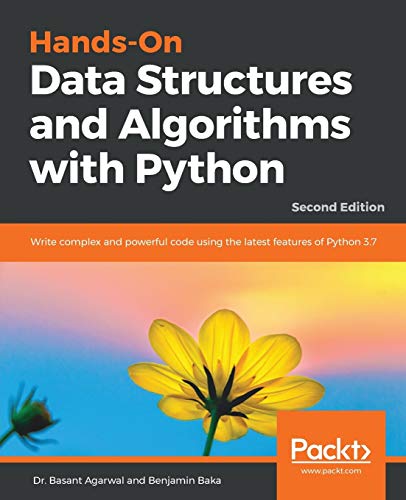
Key Features
- Understand the analysis and design of fundamental Python data structures
- Explore advanced Python concepts such as Big O notation and dynamic programming
- Learn functional and reactive implementations of traditional data structures
What you will learn
- Understand object representation, attribute binding, and data encapsulation
- Gain a solid understanding of Python data structures using algorithms
- Study algorithms using examples with pictorial representation
- Learn complex algorithms through easy explanation, implementing Python
- Build sophisticated and efficient data applications in Python
- Understand common programming algorithms used in Python data science
- Write efficient and robust code in Python 3.7
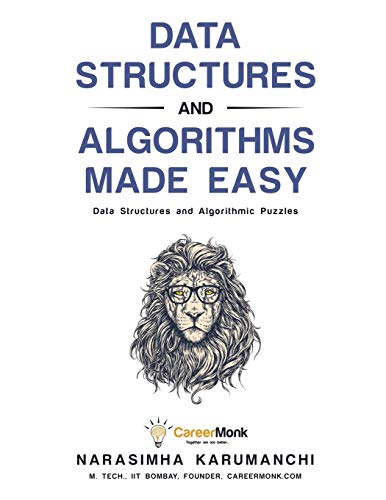
"Data Structures And Algorithms Made Easy: Data Structures and Algorithmic Puzzles" is a book that offers solutions to complex data structures and algorithms. There are multiple solutions for each problem and the book is coded in C/C++, it comes in handy as an interview and exam guide for computer scientists. It can be used as a reference manual by those readers in the computer science industry. This book serves as a guide to prepare for interviews, exams, and campus work. In short, this book offers solutions to various complex data structures and algorithmic problems.
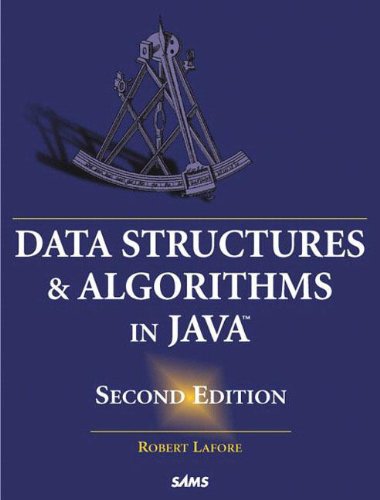
Data Structures and Algorithms in Java, Second Edition is a comprehensive book for the learners to understand this complicated topic. Algorithms are the procedures that software programs require to manipulate data structures. In this newer edition, the program examples are revised to cope with the latest version of the Java JDK. And more new questions and exercises have added at the end of each chapter, making the book even more useful. Using clear and simple examples, the author provides a small demonstration program executable on a Web browser.The programs explain in graphical form what data structures look like and how they work. In this edition, the program is edited to improve operation and clarify the algorithms.
Supplementary reading
Worked solutions to the programming projects given at the end of each chapter are made available to instructors at recognized educational institutions. This educational supplement are available at www.prenhall.com, in the Instructor Resource Center
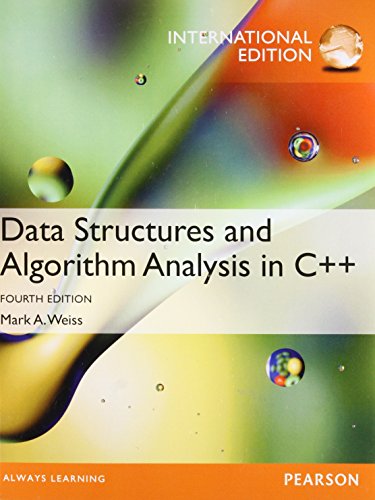
The need for effective programming and algorithm analysis has increased because of the increasing speed and power of computers. Data Structures and Algorithm Analysis in C++ is an excellent book that connects the gap between traditional Algorithms Analysis courses and the new practices. Using the C++ programming language, this book teaches readers to develop well-constructed, maximally efficient programs.
What you will learn:
- Mathematical fundamentals to understand Data Structure
- A brief introduction to the C++ language
- Various implementations of Lists, Stacks, and Quees
- Different implementations of trees
- Using of hash tables for fast and effective searches
- All about sorting and Graph Algorithms
- Advanced techniques of Data Structures
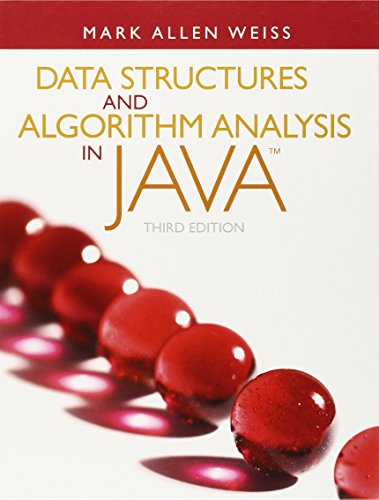
This is an advanced book on Algorithms that bridges the gap between traditional CS2 and Algorithms Analysis courses. In the old ACM Curriculum Guidelines, this course was called CS7. This book is for students who want to acquire good programming and algorithm analysis skills together so that they can develop such programs with the maximum amount of efficiency. Students should have some experience of intermediate programming, including topics as object-oriented programming and recursion, and some familiarity with discrete math.
The increase in speed and power of computers has made the need for effective programming and algorithm analysis. Covering these skills in this book, the author guides readers to develop well-constructed, maximally efficient programs in Java.
Weiss clearly describes topics from binary heaps to sorting to NP-completeness and assigns a full chapter to amortized analysis and advanced data structures and their implementation. With simple figures and examples, he provides a careful, rigorous and in-depth analysis of each type of algorithm. A logical arrangement of topics and full access to source code complement the text’s coverage.
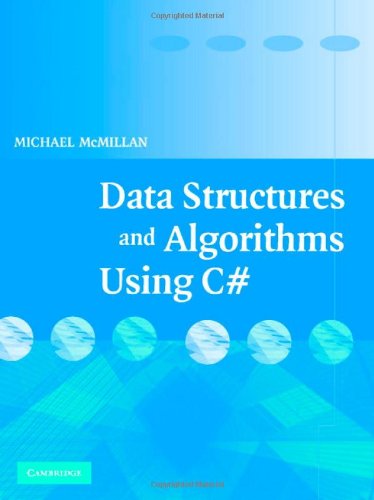
This new book makes it simple for beginning computer science students to design algorithms first using pseudocode and then build them using the C++ programming language. Based on Data Structures: A Pseudocode Approach with C, this book features a practical approach to data structures.
What you will learn:
- Basic concepts of C Language and Algorithms
- Complete guideline on Recursion
- Linear Lists like Stacks, Queues, and general linear lists
- Non-linear lists like binary trees, AVL search trees, and multiway trees
- Sorting and Searching
- Graphs and Graph Structures
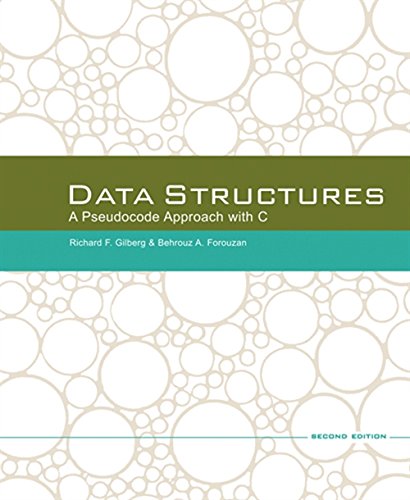
This new book makes it simple for beginning computer science students to design algorithms first using pseudocode and then build them using the C programming language. This book features a practical approach to data structures.
What you will learn:
- Basic concepts of C Language and Algorithms
- Complete guideline on Recursion
- Linear Lists like Stacks, Queues, and general linear lists
- Non-linear lists like binary trees, AVL search trees, and multiway trees
- Sorting and Searching
- Graphs and Graph Structures
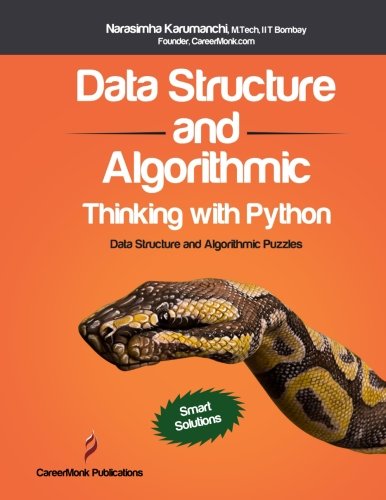
- Recursion and Backtracking
- Linked Lists, Stacks, and Queues
- Trees
- Priority Queue and Heaps
- Disjoint Sets ADT
- Graph Algorithms
- Selection Algorithms [Medians]
- Hashing and Symbol Tables
- String Algorithms
- Algorithms Design Techniques
- Greedy Algorithms
- Divide and Conquer Algorithms
- Dynamic Programming
- Complexity Classes
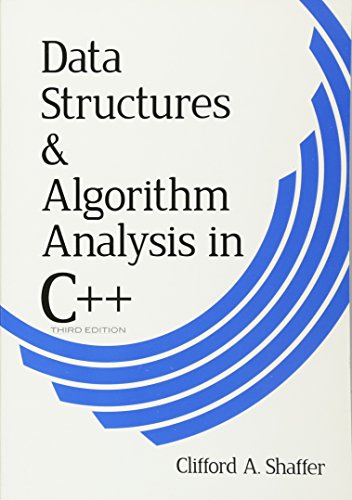
With its focus on creating efficient data structures and algorithms, this comprehensive text helps readers understand how to select or design the tools that will best solve specific problems. It uses Microsoft C++ as the programming language and is suitable for second-year data structure courses and computer science courses in algorithm analysis. Techniques for representing data are presented within the context of assessing costs and benefits, promoting an understanding of the principles of algorithm analysis and the effects of a chosen physical medium. The text also explores tradeoff issues, familiarizes readers with the most commonly used data structures and their algorithms, and discusses matching appropriate data structures to applications. The author offers explicit coverage of design patterns encountered in the course of programming the book's basic data structures and algorithms.