Best books on internet of things to build secure and scalable IoT solutions
Grab the top spot in your industry by seizing the power of IoT
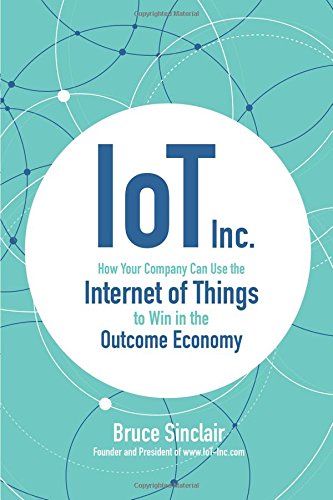
Smart products are everywhere. They’re in our companies, in our homes, in our pockets. People love these products. But what they love more is what these products do―and for anyone running a business today, outcomes are the key.
The Internet of Things (IoT) is the point of connection between products and the results they deliver―it’s where products become software. IoT Inc. explains everything you need to know to position your company within this powerful new network. And once you do, you’ll leave the competition in the dust.
Founder and president of today’s leading IoT business consulting firm, Bruce Sinclair has been helping companies develop IoT strategies for a decade―far longer than the term has even existed.
IoT isn’t a new business trend. It’s the new way of business. Period. The IoT wave is heading for your industry. You can either meet it head-on, and ride it to success, or you can turn your back and let it swamp you.
This is your playbook for transforming your company into a major player in the IoT Outcome economy.
Key Features
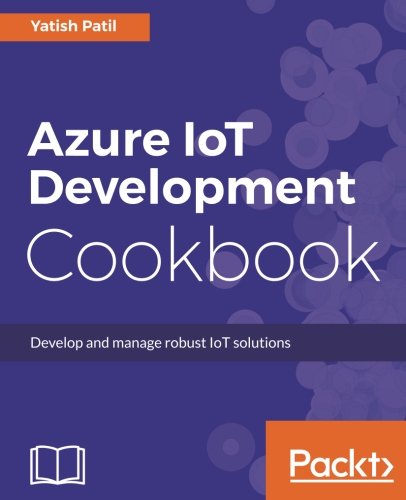
- Build secure and scalable IoT solutions with Azure IoT platform
- Learn techniques to build end to end IoT solutions leveraging the Azure IoT platform
- Filled with practical recipes to help you increase connectivity and automation across IoT devices
What you will learn
- Build IoT Solutions using Azure IoT & Services
- Learn device configuration and communication protocols
- Understand IoT Suite and Pre-configured solutions
- Manage Secure Device communications
- Understand Device management, alerts
- Introduction with IoT Analytics, reference IoT Architectures
- Reference Architectures from Industry
- Pre-Configured IoT Suite solutions.
We live in a time when the amount of data being generated and stored is growing at an exponential rate. Understanding and getting real-time insight into these data is critical to business. IoT Solutions in Microsoft's Azure IoT Suite walks you through a complete, end-to-end journey of how to collect and store data from Internet-connected devices. You'll learn to analyze the data and to apply your results to solving real-world problems. Your customers will benefit from the increasingly capable and reliable applications that you'll be able to deploy to them. You and your business will benefit from the gains in insight and knowledge that can be applied to delight your customers and increase the value from their business.
What You Will Learn
- Go through data generation, collection, and storage from sensors and devices, both relational and non-relational
- Understand, from end to end, Microsoft’s analytic services and where they fit into the analytical ecosystem
- Look at the Internet of your things and find ways to discover and draw on the insights your data can provide
- Understand Microsoft's IoT technologies and services, and stitch them together for business insight and advantage
5. IoT Hackers Handbook: An Ultimate Guide to Hacking the Internet of Things and Learning IoT Security
2017 has seen IoT devices being hacked like never before. We have seen attacks such as the Mirai Botnet, vulnerabilities in popular cars, hacking of IoT rifles, attackers taking advantage of smart toys and the list goes on.
Everything is getting connected like never-before, yet, security is one of the last thoughts during the product launch stage for most of the manufacturers. This book can be treated as a technical journey into mistakes which manufacturers make while building IoT devices, or the so-called “smart things”.
IoT Hackers Handbook is written in a beginner-friendly way covering everything from the extreme basics and then using exercises and labs to have the readers learn-by-doing. Some of the contents that are covered in the book include: Embedded Device Exploitation Firmware Exploitation and Emulation Hardware communication protocols – UART, SPI etc.
JTAG debugging and exploitation Software Defined Radio, ZigBee and BLE Exploitation After reading the book, you will be able to understand the various security vulnerabilities crippling the Internet of Things devices, and how you can play a major role in identifying these security issues, thus making the IoT ecosystem safer.
In the past, companies found success with a product-first orientation; they made a thing that did a thing. The Inversion Factor explains why the companies of today and tomorrow will have to abandon the product-first orientation. Rather than asking "How do the products we make meet customer needs?" companies should ask "How can technology help us reimagine and fill a need?"
The authors explain how the introduction of "smart" objects connected by the Internet of Things signals fundamental changes for business. The IoT, where real and digital coexist, is powering new ways to meet human needs. Companies that know this include giants like Amazon, Airbnb, Uber, Google, Tesla, and Apple, as well as less famous companies like Tile, Visenti, and Augury. The Inversion Factor offers a roadmap for businesses that want to follow in their footsteps.
The authors chart the evolution of three IoTs -- the Internet of Things (devices connected to the Internet), the Intelligence of Things (devices that host software applications), and the Innovation of Things (devices that become experiences). Finally, they offer a blueprint for businesses making the transition to inversion and interviews with leaders of major companies and game-changing startups.
Today we are seeing data (both structured and unstructured) growing by leaps and bounds available through mediums like blogs, social media, transactional systems etc. With advent of IoT, you will see a large volume of raw data emitting from devices like sensors.
We would look at how to incrementally apply IoT transformations to build connected products in various industries. At the end, we would understand the technical strategy and how to build IoT applications using IoT cloud offerings from Microsoft, IBM, Amazon and Predix and even build one using open source technologies.
What You Will Learn
- A detail overview of key components of Internet of Things and most comprehensive view of an Enterprise IoT stack.
- How to apply IoT in context of real world applications by covering detailed use cases on manufacturing, automotive and home automation.
- Understand the technical strategy and how to implement IoT applications using Microsoft, IBM , Amazon and Predix IoT offerings
- Various open source technologies and map it to our Enterprise IoT Stack.
- Includes bonus chapters on Cognitive IoT, Cognitive IoT architecture and Blockchain.
Today we are seeing data (both structured and unstructured) growing by leaps and bounds available through mediums like blogs, social media, transactional systems etc. With advent of IoT, you will see a large volume of raw data emitting from devices like sensors.
We would look at how to incrementally apply IoT transformations to build connected products in various industries. At the end, we would understand the technical strategy and how to build IoT applications using IoT cloud offerings from Microsoft, IBM, Amazon and Predix and even build one using open source technologies.
IOT Enabled, Brief overview of iot technology, applications and its uses project with arduino uno and nodejs.
What You Will Learn
- How the combination of sensors, cloud computing and machine learning can be used to improve customer experiences,
- Drive operational improvements and build new business models.
- Guidance through the maze of emerging technologies, customer experiences, and business models
- Key methods to success from Amazon’s master playbook
- Such as creating seamless customer experiences, process improvement and new business models
- Utilizing tools such as sensors, machine learning and cloud computing
- Approaches to help you tackle the technology, business and internal challenges in innovating with the internet of things
- IoT as the backbone for a third-wave of technology-led innovation and digital disruption.
Raspberry Pi with Java: Programming the Internet of Things (IoT) fills an important gap in knowledge between seasoned Java developers and embedded-hardware gurus, taking a project-based approach to skills development from which both hobbyists and professionals can learn. By starting with simple projects based on open-source libraries such as Pi4J, hobbyists can get immediate results without a significant investment in time or hardware.
Later projects target simplified industrial use cases where professionals can start to apply their skills to practical problems in the fields of home automation, healthcare, and robotics. This progression prepares you to be an active participant in the IoT revolution that is reshaping our lives.
What You Will Learn
- Hardware used in projects is affordable and easily accessible
- Follows a project-based learning approach with a gradual learning curve
- Projects are based on open-source code repositories with commercial friendly licenses
- Uses an industry-standard platform that allows for high performance, secure, production-ready applications
- Introduces Java SE Embedded for large devices and Java ME Embedded for small devices
- Code is portable to a wide variety of ARM and MIPS based platforms
- Provides practical skill development with advanced projects in the fields of home automation, healthcare, and robotics
Current hype aside, the Internet of Things will ultimately become as fundamental as the Internet itself, with lots of opportunities and trials along the way. To help you navigate these choppy waters, this practical guide introduces a dedicated methodology for businesses preparing to transition towards IoT-based business models.
With a set of best practices based on case study analysis, expert interviews, and the authors’ own experience, the Ignite | IoT Methodology outlined in this book delivers actionable guidelines to assist you with IoT strategy management and project execution. You’ll also find a detailed case study of a project fully developed with this methodology.
What You Will Learn
- Illustrative case studies of selected IoT domains, including smart energy, connected vehicles, manufacturing and supply chain management, and smart cities
- The Ignite | IoT Methodology for defining IoT strategy, preparing your organization for IoT adoption, and planning and executing IoT projects
- A detailed case study of the IIC Track & Trace testbed, one of the first projects to be fully developed according to the Ignite | IoT Methodology